



Bullet Resistant Ratings
Ballistic Testing Standards
Insulgard Security Products offers innovative bullet resistant security solutions for banks, commercial buildings, educational institutions, government facilities, and more. Our bullet-resistant products are architecturally appealing and include custom-engineered doors, windows, and glass/glazing systems that provide superior, certified protection from ballistic threats. Insulgard products adhere to standards set by Underwriters Laboratories (UL) and the National Institute of Justice (NIJ), rated for utmost protection through testing in laboratory conditions.


The Role of UL (Underwriters Laboratories) in Bullet-Resistant Ratings
Underwriters Laboratories (UL) is a respected and rigorous certifier of bullet resistance.
UL’S CERTIFICATION PROCESS
The UL certification process requires extensive testing to ensure products meet stringent safety standards. The process begins with the submission of product samples to UL laboratories, where the materials are shot with various types of firearms and ammunition to test their ability to stop bullets and prevent penetration.
SIGNIFICANCE OF UL CERTIFICATION IN SECURITY PRODUCTS
UL certification provides assurance to architects, contractors, and end-users that the bullet-resistant products they are using meet high standards of quality and performance. UL certification is widely recognized and respected in the global security industry, making it a key factor in the selection of bullet-resistant materials.
UL 752 Testing Standards
UL bullet-resistant ratings are detailed in the UL 752 standard. The ratings are divided into levels, each corresponding to a specific type of firearm and ammunition:
Protects against small caliber handguns such as a 9mm.
Protects against larger caliber handguns such as a .357 Magnum.
Protects against high-powered handguns such as a .44 Magnum.
Provides protection against rifles with lower calibers.
Protects against high-caliber, armor-piercing rounds.
RATINGS OF BULLET RESISTANT MATERIALS AS IDENTIFIED BY UL 752 (DECEMBER 21, 2006)
| RATING | WEAPON | AMMUNITION | GRAIN | GRAMS (g) | MINIMUM VELOCITY (FPS) | MINIMUM VELOCITY (MPS) | NO. OF SHOTS |
|---|---|---|---|---|---|---|---|
| LEVEL 1 |  9mm Pistol |  9mm full metal copper jacket with lead core | 124 | 8.0 | 1175 | 358 | 3 |
| LEVEL 2 |  .357 Magnum Pistol |  .357 magnum jacketed lead soft point | 158 | 10.2 | 1250 | 381 | 3 |
| LEVEL 3 |  .44 Magnum Pistol |  .44 magnum lead semi-wadcutter gas checked | 240 | 15.6 | 1350 | 411 | 3 |
| LEVEL 4 |  .30 Caliber Rifle |  .30 caliber rifle lead core soft point | 180 | 11.7 | 2540 | 774 | 1 |
| LEVEL 5 |  7.62mm Rifle |  7.62mm rifle lead core full metal copper jacket, military ball | 150 | 9.7 | 2750 | 838 | 1 |
| LEVEL 6 |  9mm Submachine Gun | 9mm full metal copper jacket with lead core | 124 | 8.0 | 1400 | 427 | 5 |
| LEVEL 7 |  5.56mm Rifle |  5.56mm rifle full metal copper jacket with lead core | 55 | 3.56 | 3080 | 939 | 5 |
| LEVEL 8 |  7.62mm Rifle | 7.62mm rifle lead core full metal copper jacket, military ball | 150 | 9.7 | 2750 | 838 | 5 |
| Supplementary Shotgun |  Shotgun |  12-gauge rifled lead slug | 437 | 28.3 | 1585 | 483 | 3 |
| Supplementary Shotgun | Shotgun | 12-gauge 00 lead buckshot (12 pellets) | 650 | 42 | 1200 | 366 | - |
NIJ Testing Standards
NIJ bullet-resistant ratings (under Standard 0108.01) outline the performance requirements for bullet-resistant materials used in protective structures like doors, windows, and shields. These ratings are categorized into different levels, each designed to resist specific types of ammunition:
Not defined in NIJ Standard 0108.01 (primarily a body armor rating in NIJ 0101.06).
Protects against 9mm Full Metal Jacket (FMJ) and .357 Magnum Jacketed Soft Point (JSP) bullets, offering protection against common handgun threats.
Protects against 9mm Full Metal Jacket (FMJ) and .357 Magnum Jacketed Soft Point (JSP) bullets, offering protection against common handgun threats.
Not defined in NIJ Standard 0108.01 (primarily a body armor rating in NIJ 0101.06).
Protects against 7.62mm NATO Full Metal Jacket (FMJ) rifle bullets, providing robust protection against rifle threats.
Protects against .30 caliber Armor-Piercing (AP) bullets, offering the highest level of protection against high-velocity rifle threats, typically with armor-piercing capabilities.
RATINGS OF BULLET RESISTANT MATERIALS AS IDENTIFIED BY NATIONAL INSTITUTE OF JUSTICE (NIJ) 0108.01
| RATING | AMMUNITION | GRAIN | (G) | MINIMUM VELOCITY (FPS) | MINIMUM VELOCITY (MPS) | NO. OF SHOTS |
|---|---|---|---|---|---|---|
| LEVEL I | .22 long rifle high velocity lead | 40 | 2.6 | 1050 +/- 40 | 320 +/- 12 | 5 |
| LEVEL II | .38 special round nose lead | 158 | 10.2 | 850 +/- 50 | 259 +/- 15 | 5 |
| LEVEL IIA | 357 mag. jacketed soft point | 158 | 10.2 | 1250 +/- 50 | 381 +/- 15 | 5 |
| LEVEL IIA | 9mm full metal jacket | 124 | 8.0 | 1090 +/- 40 | 332 +/- 15 | 5 |
| LEVEL II | 357 mag. jacketed soft point | 158 | 10.2 | 1395 +/- 50 | 425 +/- 15 | 5 |
| LEVEL II | 9mm full metal jacket | 124 | 8.0 | 1175 +/- 40 | 358 +/- 12 | 5 |
| LEVEL IIIA | .44 mag. lead semi-wadcutter gas checked | 240 | 15.55 | 1400 +/- 50 | 426 +/- 15 | 5 |
| LEVEL IIIA | 9mm full metal jacket | 124 | 8.0 | 1400 +/- 50 | 426 +/- 15 | 5 |
| LEVEL III | 7.62mm (308 Winchester) full metal jacket | 150 | 9.7 | 2750 +/- 50 | 838 +/- 15 | 5 |
| LEVEL IV | .30-06 armor piercing | 166 | 10.8 | 2850 +/- 50 | 868 +/- 15 | 1 |
enhanced security across various environments
Rated Product Lines
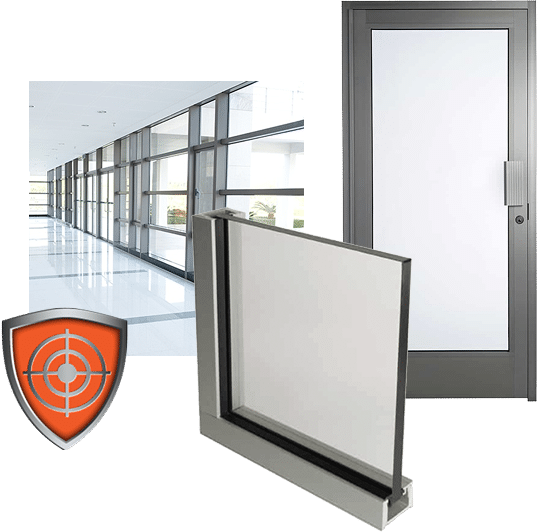
BulletBlock offers robust protection against ballistic threats in high-risk settings like government buildings, banks, and law enforcement facilities. Products include:
- Framing Systems: Custom framing systems designed to support bullet-resistant doors and windows, enhancing overall security.
- Doors: Custom-designed doors offering robust protection against handguns and rifles, available in various styles and finishes.
- Glazing: Various materials integrated into windows, doors, and barriers to provide ballistic resistance and maintain visibility.
- Fiberglass: Layered panels used to line walls, ceilings, doors, or millwork that separate on impact to trap bullets.
BulletBlock products are available in UL752 standards (rated levels 1 to 8), offering scalable protection against different types of firearms and ammunition.
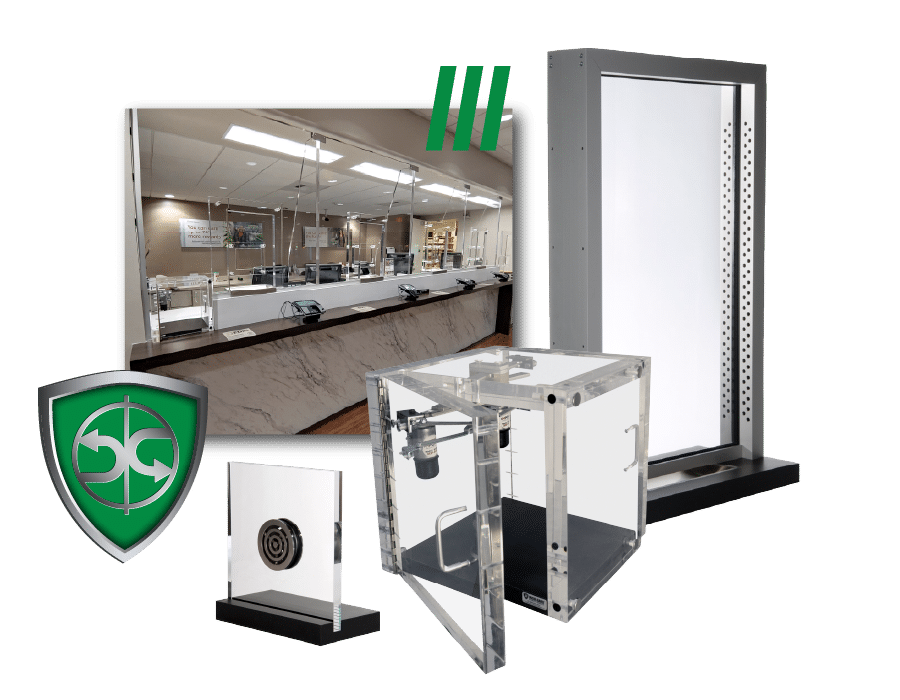
SafeChange products are specifically engineered to enhance security in transactional environments such as banks, convenience stores, and ticket booths. Products include:
- Counterline Systems: Modular systems designed to secure transaction areas and provide bullet-resistant barriers.
- Transaction Windows: Bullet-resistant windows facilitating secure exchanges while deterring threats.
- Package Passers/Drawers: Secure mechanisms for transferring items safely through barriers.
- Pass Thru Trays: Bullet-resistant trays for safe transfer of documents and small items.
- Accessories: Components like overhead louvers and speak-thru systems that enhance functionality and communication through bullet-resistant barriers.
SafeChange products are typically rated up to UL Level 3, providing adequate protection against handguns and smaller firearms commonly used in robbery attempts.
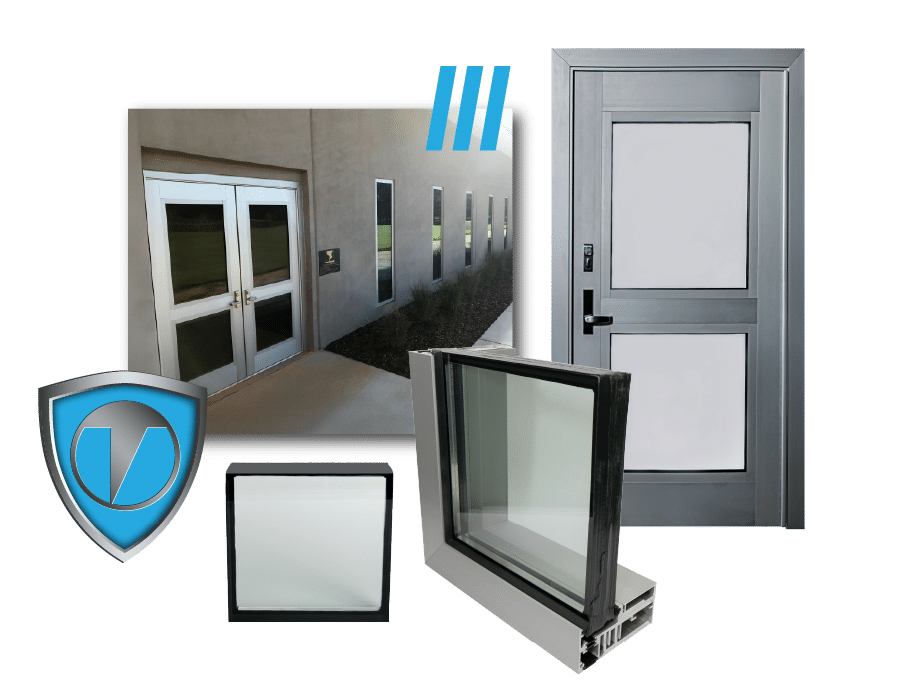
StormDefend products combine bullet resistance with severe weather protection, making them ideal for use in tornado and hurricane-prone regions and critical emergency shelters. Products include:
- Window System: An impact-resistant window system meeting ICC500 certification standards for storm shelters, ensuring durability and security while also meeting UL752 level 3 ballistic protection.
- Door System: An ICC500 certified door system designed to withstand severe weather conditions while also providing ballistic protection.
- Glazing Materials: High-performance materials used in StormDefend windows and doors to meet ICC500 certification requirements along with UL Level 3 bullet resistance.
StormDefend windows, doors, and glazing are rated up to UL Level 3 for bullet resistance, ensuring safety during both security threats and natural disasters.
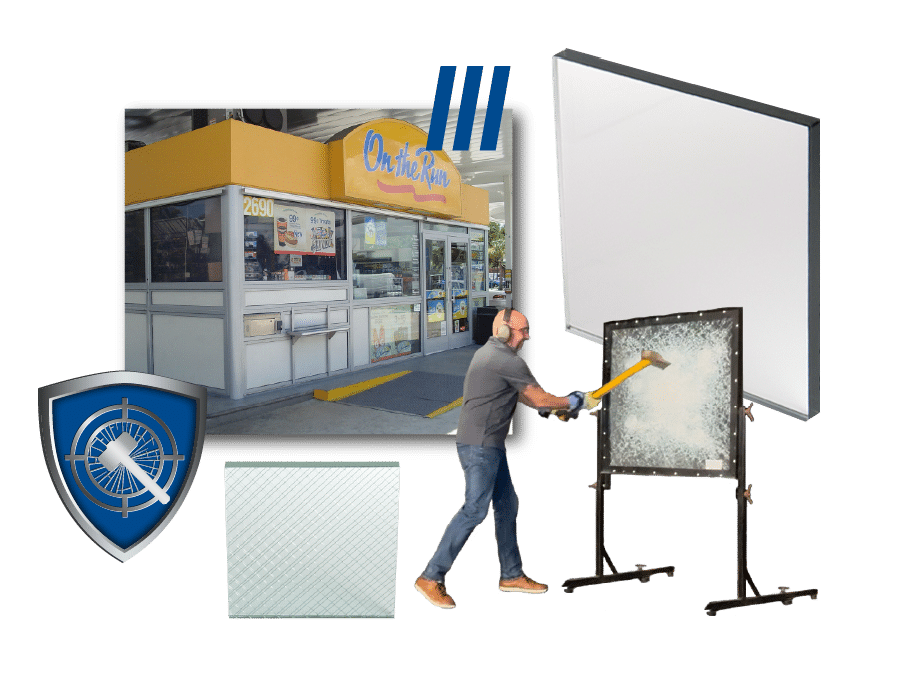
ForceProtect glazing products are designed and tested to fortify security in vulnerable areas of buildings, such as entryways and administrative offices. Products include:
- Glazing Materials: High-strength, forced entry-resistant materials used in existing windows and doors to provide varying levels of protection against physical attack.
ForceProtect glazing is available in various levels of protection meeting ASTM F1233, ASTM F1915, and WMFL test procedures, offering varying degrees of protection against physical attacks.
Key Factors in Designing & Constructing Bullet-REsistant Products
Products must be designed and engineered to absorb and dissipate the energy of a bullet, preventing penetration and minimizing the risk of injury. This often involves layering materials with different properties to enhance overall resistance. Achieving reliable ballistic protection depends on several factors, including material composition, product construction, proper installation, and compliance with recognized testing standards.
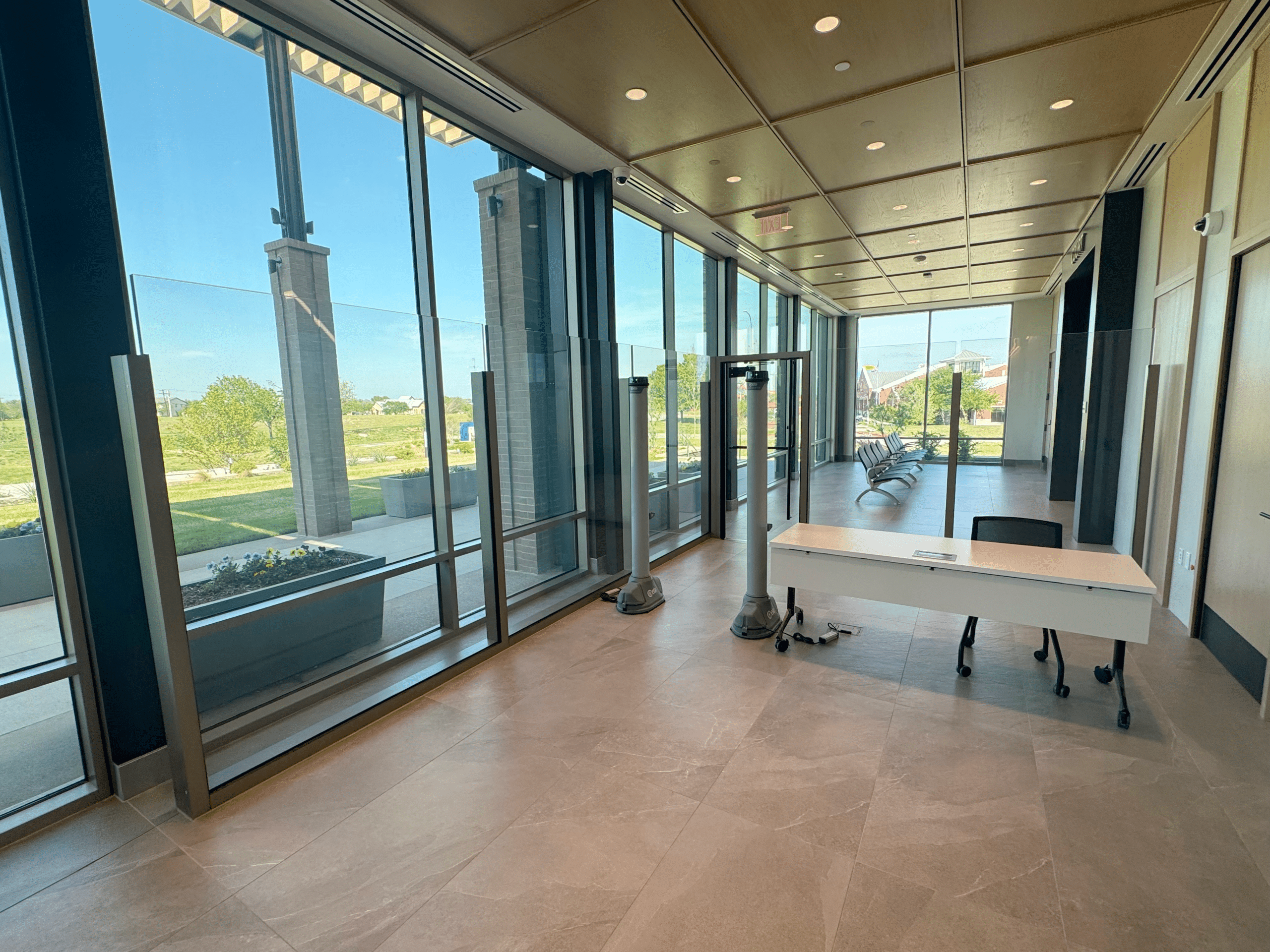
Protection of Assets and Personnel
By preventing bullets from penetrating walls, doors, and windows, bullet-resistant products minimize the risk of injury and loss.
Factors Affecting Bullet Resistance
All Insulgard bullet-resistant security systems are designed, engineered, tested, and installed to perform exactly as described in the stated UL and NIJ standards.
Material Composition and Thickness
The effectiveness of bullet-resistant materials depends largely on their composition and thickness. Materials such as laminated glass, polycarbonate, and specialized plastics are commonly used in bullet-resistant products. Thicker materials also generally offer greater resistance to ballistic threats.
Compliance with Industry Standards and Regulations
UL certification ensures that products comply with industry standards and regulations, which is important for meeting legal requirements and ensuring that security measures are effective.
Installation Considerations
Even the best materials can fail if not installed correctly. It is important to follow manufacturer guidelines and industry best practices during installation to achieve optimal performance.
The History & Evolution of Bulletproof Technology
The Evolution of Bullet-Resistant Ratings
Bullet-resistant products have evolved significantly over the past decade, driven by increasing security concerns and advancements in materials and manufacturing technologies. Understanding the historical context and evolution of these products provides valuable insights into their necessity and continuous development.
The need for bullet-resistant products dates back to the early 20th century, coinciding with the rise of firearms and the escalation of violent crimes. Initially, bullet-resistant materials were rudimentary, often consisting of thick layers of metal or heavy fabrics. These early solutions were primarily used in military applications and later adapted for civilian use in banks, prisons, and law enforcement facilities.
Over the decades, technological advancements have revolutionized bullet-resistant products, making them more effective, versatile, and aesthetically appealing. Key advancements include:
- Materials Innovation: Early bullet-resistant materials like steel and thick glass have been replaced by advanced composites, laminates, and polycarbonates. These materials offer superior ballistic resistance while being lighter and more flexible, allowing for broader applications in architectural design.
- Testing and Certification Standards: The establishment of rigorous testing standards by organizations like Underwriters Laboratories (UL) and the National Institute of Justice (NIJ) ensures that bullet-resistant products meet specific performance criteria against various firearms and ammunition types, instilling confidence in their effectiveness.
- Architectural Integration: Modern bullet-resistant products are designed with architectural aesthetics in mind, blending seamlessly into building designs without compromising security. This integration is crucial for environments such as corporate offices, retail establishments, and educational institutions where both safety and visual appeal are paramount.
Recent advancements in bullet-resistant technology have focused on enhancing performance and functionality:
- Customization and Tailored Solutions: Insulgard’s tailored solutions meet the specific needs of different environments, taking into consideration both form and functionality. Custom-engineered doors, windows, and glazing systems are best implemented when blended seamlessly into the surrounding architecture, providing the appropriate level of protection in any setting.
- Integration with IoT and Security Systems: Bullet-resistant products can now be integrated with smart security systems, allowing for real-time monitoring and response to security breaches.
- Multi-Threat Protection: Some advanced bullet-resistant materials also offer protection against blasts, forced entry, and severe weather events, providing comprehensive security solutions for critical infrastructure.
Looking ahead, the future of bullet-resistant products is poised for further innovation and integration:
- Advanced Materials Research: Ongoing research into nanotechnology and advanced ceramics aims to develop lighter, stronger, and more resilient bullet-resistant materials.
- Smart Building Integration: Integration with building automation systems and AI-driven security solutions will enhance the responsiveness and effectiveness of bullet-resistant products in mitigating security threats.
Applications of Bullet-Resistant Products
Contemporary Applications of Bullet-Resistant Ratings
A wide range of facilities require bullet-resistant solutions to heighten security and follow “best practice” risk mitigation. In recent years, the application of bullet-resistant products has included:
Request a Quote
Speak With a Bullet-Resistant Security Expert
By adhering to UL and NIJ standards, our doors, windows, and glazing systems are certified for reliable performance in the event of an attack or security breach.
Opting for custom-engineered Insulgard Security Products early in the planning stages helps preserve your aesthetic vision, while also safeguarding against potential threats and making sure your new-construction project is up to code.
Contact us to request a quote or to learn more about how our bullet-resistant products can benefit your organization.