



Wind & Impact Ratings
FEMA Tornado Window & Door Testing for Wind & Impact Resistance
Wind & Impact Ratings
Compliance with FEMA and ICC standards is not just a regulatory requirement—it’s a critical aspect of responsible building practice. Tornadoes and hurricanes cause severe damage, posing significant risks to structural integrity and human safety. Without the right wind and impact-resistant windows and doors, the entire structure of a storm shelter becomes compromised.
At Insulgard, we understand the necessity of rigorous testing and compliance with the highest standards to guarantee the safety of your storm shelter projects. This comprehensive guide explores key aspects of tornado and hurricane safe room testing, relevant requirements, and how Insulgard security products meet and exceed these stringent standards.
Key Impact Resistant Testing Standards and Regulations
Impact-resistant windows and doors designed to FEMA-361 and ICC-500 standards are tested to withstand high wind pressures and resist penetration by debris, helping you maintain compliance, reduce the risk of structural failure, and ensure the safety of the occupants sheltering within.


Following FEMA Regulations
FEMA-361 sets the performance criteria for tornado safe rooms.
The Federal Emergency Management Agency (FEMA) has established regulations, particularly FEMA-361, that set the gold standard for tornado and hurricane safe room construction. Compliance with these regulations ensures that safe rooms provide the highest level of protection.
FEMA-361 Overview
International Building Code (IBC) Requirements
The International Building Code (IBC) specifies building codes for schools and critical facilities in high-wind zones.
Established in 2000 by the International Code Council (ICC), the IBC was a significant step towards standardizing building codes across the United States and many other countries to address safety considerations for extreme weather events like tornadoes and hurricanes.
IBC 2015 and later versions require all K-12 schools and emergency fire/police/call center facilities located in 250-mph wind zones to build storm shelters that meet ICC-500 certification standards, including the ability to withstand an EF5 tornado.
The 2015 and later versions of the International Building Code (IBC) include strict requirements for wind load calculations, enhanced impact-resistant glazing standards, and mandatory missile impact testing for windows and doors in high-risk areas.

Key Aspects of ICC-500 Certification
ICC-500 provides guidelines for storm shelter design and construction. Specifically:
International Building Code (IBC) Requirements
Established in 2000 by the International Code Council (ICC), the International Building Code (IBC) was a significant step towards standardizing building codes across the United States and many other countries to address safety considerations for extreme weather events like tornadoes and hurricanes.
IBC 2015 and later versions require all K-12 schools and emergency fire/police/call center facilities located in 250-mph wind zones to build storm shelters that meet ICC-500 certification standards, including the ability to withstand an EF5 tornado.
The 2015 and later versions of the International Building Code (IBC) include strict requirements for wind load calculations, enhanced impact-resistant glazing standards, and mandatory missile impact testing for windows and doors in high-risk areas.
DESIGN AND CONSTRUCTION GUIDANCE FOR COMMUNITY SAFE ROOMS. FEMA P-361, SECOND EDITION, AUGUST 2008
Comparison of Debris Impact Test Requirements for Tornadoes and Hurricanes
Tornado Safe Room Missile Testing Requirements
| GUIDANCE, CODE, OR STANDARD CRITERIA FOR THE DESIGN MISSILE | HORIZONTAL DEBRIS IMPACT TEST SPEED (MPH) | LARGE MISSILE SPECIMEN | MOMENTUM AT IMPACT (LBF-S)+ | ENERGY AT IMPACT (FT-LBF)+ |
|---|---|---|---|---|
| DOE-STD-1020-2002 | 25 mph | 3,000-lb auto | 3,240 | 67,710 |
| 75 mph | 75-lb pipe | 257 | 14,110 | |
| 150 mph (maximum) | 15-lb 2×4 | 103 | 11,288 | |
| 100 mph (maximum) | 15-lb 2×4 | 68 | 5,017 | |
| FEMA 320/FEMA 361 | 100 (maximum) | 15-lb 2×4 | 68 | 5,017 |
| 80 (minimum) | 15-lb 2×4 | 55 | 3,210 | |
| ICC-500 Storm Shelter Standard | 100 (maximum) | 15-lb 2×4 | 68 | 5,017 |
| 80 (minimum) | 15-lb 2×4 | 55 | 3,210 | |
| IBC/IRC 2006, ASCE 7-05, Florida and North Carolina State Building Codes, ASTM E 1886/E 1996 | N/A | None | N/A | N/A |
Hurricane Safe Room Missile Testing Requirements**
| GUIDANCE, CODE, OR STANDARD CRITERIA FOR THE DESIGN MISSILE | HORIZONTAL DEBRIS IMPACT TEST SPEED (MPH) | LARGE MISSILE SPECIMEN | MOMENTUM AT IMPACT (LBF-S)+ | ENERGY AT IMPACT (FT-LBF)+ |
|---|---|---|---|---|
| DOE-STD-1020-2002 | 50 | 15-lb 2×4 | 34 | 1,254 |
| FEMA 320/FEMA 361 | 128 (maximum) | 9-lb 2×4 | 53 | 4,932 |
| 80 (minimum) | 9-lb 2×4 | 33 | 1,926 | |
| ICC-500 Storm Shelter Standard | 102 (maximum) | 9-lb 2×4 | 42 | 3,132 |
| FEMA 320/FEMA 361 | 100 (maximum) | 15-lb 2×4 | 68 | 5,017 |
| 64 (minimum) | 9-lb 2×4 | 26 | 1,233 | |
| Florida State Emergency Shelter Program (SESP) Criteria and EOC Design Criteria | 50 (EOC recommended) | 15-lb 2×4 | 34 | 1,254 |
| 55 (EHPA recommended) | 9-lb 2×4 | 23 | 911 | |
| 34 (EHPA minimum) | 9-lb 2×4 | 14 | 348 | |
| IBC/IRC 2006, ASCE 7-05, Florida and North Carolina State Building Codes, ASTM E 1886/E 1996** | 55 | 9-lb 2×4 | 23 | 910 |
| 34 | 9-lb 2×4 | 14 | 348 |
+ lbf-s = pounds (force) seconds and ft-lbf = foot pounds (force)
** Hurricane missile testing requirements in these codes and standards only apply in the windborne debris regions (defined in the code/standard) and not throughout the hurricane-prone region
N/A = Not applicable

Proven Performance
Testing Protocols for Storm Shelters & Safe Rooms
At Insulgard, testing is not a one-time milestone—it is an ongoing commitment to performance, transparency, and trust. Rigorous testing protocols are required before certifying that storm shelters and safe rooms provide necessary protection.
Impact of Tornadoes and Hurricanes
Tornadoes and hurricanes are two of nature’s most destructive forces. They can generate winds exceeding 250 mph, causing catastrophic damage to buildings, infrastructure, and, most importantly, human life.
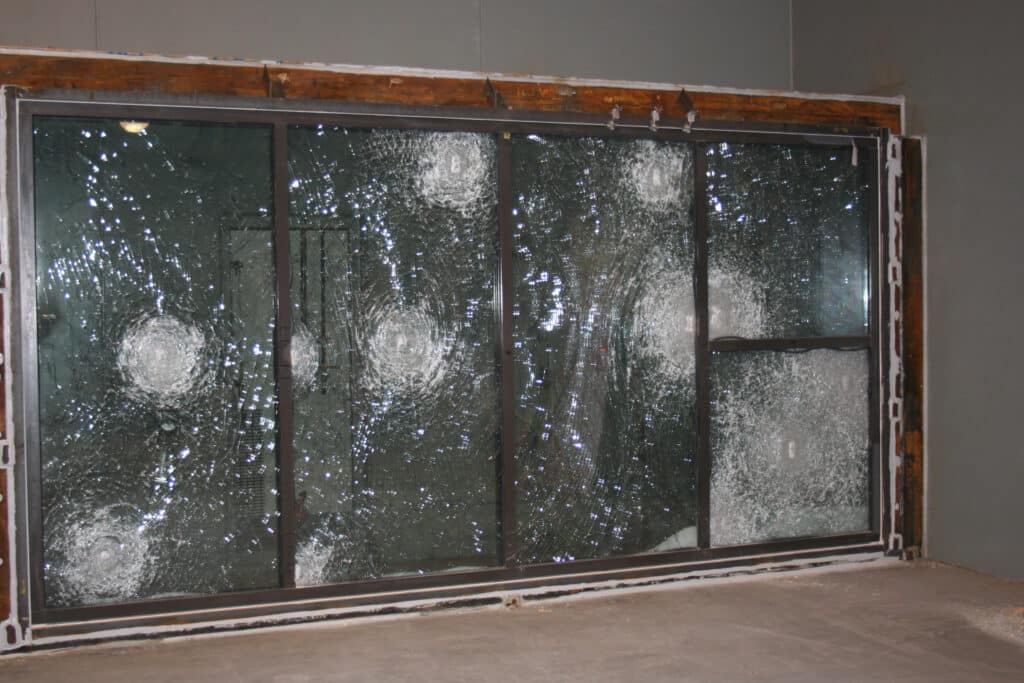
The Devastation
The Defense
Windows and doors are the first line of defense. Wind-and-impact-resistant tested windows and doors top the list of safety requirements for structures in the 250-mph wind tornado and hurricane zones.
Here’s why: when rain and wind enter a building through broken windows or other openings, it creates a specific type of pressure known as “positive internal pressure.” This pressure creates a chain reaction of events involving:
Advancing Extreme Weather Protection
Evolution of Safe Room Standards
Over the years, the approach to building safe rooms and storm shelters has evolved significantly. As understanding of wind dynamics and impact forces improved, so did the standards for safe rooms.
Key Milestones
Why Choose Insulgard?
Insulgard Security Products: Meeting and Exceeding Standards
Insulgard provides the highest quality impact-resistant products that meet and exceed industry standards. Our products are certified by UL and undergo rigorous testing to ensure they provide optimal protection during extreme weather events.
Interested in learning more about how our impact-resistant products can safeguard your facility? Contact us today to request a quote and discuss your specific needs. Our team of experts is ready to assist you in selecting the right products to ensure maximum protection.