


November 11, 2026
- Standards & Certifications
Is There Such a Thing as a “FEMA Approved” Storm Shelter? What Specifiers Need to Know
The short answer is that there’s no such thing as a FEMA approved storm shelter. The Federal Emergency Management Agency (FEMA) doesn’t approve, certify, or verify storm shelters, safe rooms, or the products used to build them.
What matters for architects, contractors, and procurement teams is compliance: whether a shelter and its components meet the ICC 500 standard and, where it applies, FEMA P-361, and whether that compliance can be documented. This article explains what “FEMA approved” claims usually mean, how FEMA P-361 and ICC 500 differ, where storm shelters are required, and how to verify that storm shelter windows and doors are genuinely compliant.
Key Takeaways
- FEMA doesn’t approve or certify storm shelters, safe rooms, or their products, and it prohibits companies from claiming it does.
- FEMA P-361 is design guidance; ICC 500 is the code-referenced standard for storm shelters. They overlap, but they aren’t identical.
- FEMA P-361 criteria become mandatory when a safe room is funded through a FEMA grant.
- Compliance for windows and doors is shown through independent third-party testing, listing, and labeling, such as UL certification.
Does FEMA Approve or Certify Storm Shelters?
No. FEMA publishes guidance on how safe rooms should be designed and built, but it doesn’t evaluate or approve individual shelters or products. On its Safe Rooms page, FEMA states that it does not verify or certify design calculations or products. Its Safe Room Resources page goes further: contractors, individuals, and firms are “prohibited from stating that they are, or produce products that are, ‘FEMA approved’ or ‘FEMA certified.’”
So what do these claims usually mean? In most cases, a company describing a “FEMA approved storm shelter” or a “FEMA certified safe room” means the shelter or component was designed to FEMA P-361 criteria, tested to ICC 500, or both. Those are meaningful achievements, but they aren’t the same as approval from FEMA, and the loose terminology can cause real problems for project teams. It’s a similar distinction to the one between listed and tested products, which we cover in UL Listed vs. Tested to UL 752: Understanding the Difference.
For specifiers, the distinction matters in three places:
- Specifications and submittals. A “FEMA approved” label gives a design professional or code official nothing to verify. Compliance needs to be documented through test reports, listings, and labels tied to a specific standard and edition.
- Code compliance. Storm shelters required by the building code must meet ICC 500, and it’s the local authority having jurisdiction, not FEMA, that enforces it.
- Grant-funded projects. Safe rooms built with FEMA grant funds must meet the FEMA Funding Criteria in FEMA P-361, and the project team needs to be able to show that every component meets them.
ICC 500 vs. FEMA P-361: Standard vs. Guidance
ICC 500, the ICC/NSSA Standard for the Design and Construction of Storm Shelters, is a consensus standard developed by the International Code Council (ICC) and the National Storm Shelter Association (NSSA). It has been referenced by the International Building Code (IBC) and International Residential Code (IRC) since their 2009 editions, so it becomes enforceable wherever those codes are adopted. The current edition is ICC 500-2023.
FEMA P-361, Safe Rooms for Tornadoes and Hurricanes: Guidance for Community and Residential Safe Rooms, is FEMA’s design guidance for safe rooms that provide “near-absolute protection” from extreme winds and windborne debris. The current fifth edition was published in 2024 and references ICC 500-2023. It uses ICC 500 as its foundation, then adds FEMA Funding Criteria that go beyond the standard in some areas.
The two documents also use different terms. ICC 500 governs storm shelters, while FEMA P-361 covers safe rooms. As FEMA puts it, all safe rooms are storm shelters, but not all storm shelters are safe rooms. FEMA P-361 also distinguishes between community and residential safe rooms, which we explain in A Community Safe Room vs. a Residential Safe Room.
Because FEMA P-361 is guidance rather than code, it becomes a requirement when a safe room is funded through FEMA’s Hazard Mitigation Assistance grants. For most grant-funded safe rooms (excluding prefabricated residential units), the fifth edition applies to disaster declarations and funding opportunities published on or after March 31, 2026. For a broader introduction to safe rooms, see our guide What Is a FEMA Safe Room?
| ICC 500 | FEMA P-361 | |
| Published by | ICC and NSSA | FEMA |
| Type | Consensus standard | Design guidance |
| Current edition | ICC 500-2023 | Fifth edition (2024) |
| Applies to | Storm shelters | Community and residential safe rooms |
| When it’s required | Where adopted through the IBC or IRC, including shelters required by IBC Section 423 | When a safe room is funded through FEMA grants |
| Level of protection | Minimum requirements for storm shelter design and construction | “Near-absolute protection”; Funding Criteria exceed ICC 500 in some areas |
| How compliance is shown | Sealed design documents, quality assurance and special inspections, and tested, listed, and labeled components | ICC 500 compliance plus documentation against the FEMA Funding Criteria |
Where Are Storm Shelters Required?
Section 423 of the 2015, 2018, 2021, and 2024 editions of the IBC requires certain new buildings located in a 250 mph tornado wind-speed zone to include a storm shelter built to ICC 500. These include:
- 911 call stations
- Emergency operations centers
- Fire, rescue, and ambulance stations
- Police stations
- K–12 school buildings with an occupant load of 50 or more (with certain exceptions)
The International Existing Building Code (IEBC), from its 2018 edition onward, applies parallel requirements to additions to existing buildings. For more detail, see When Are You Required to Include a Tornado Safe Room in Your Building Plans?
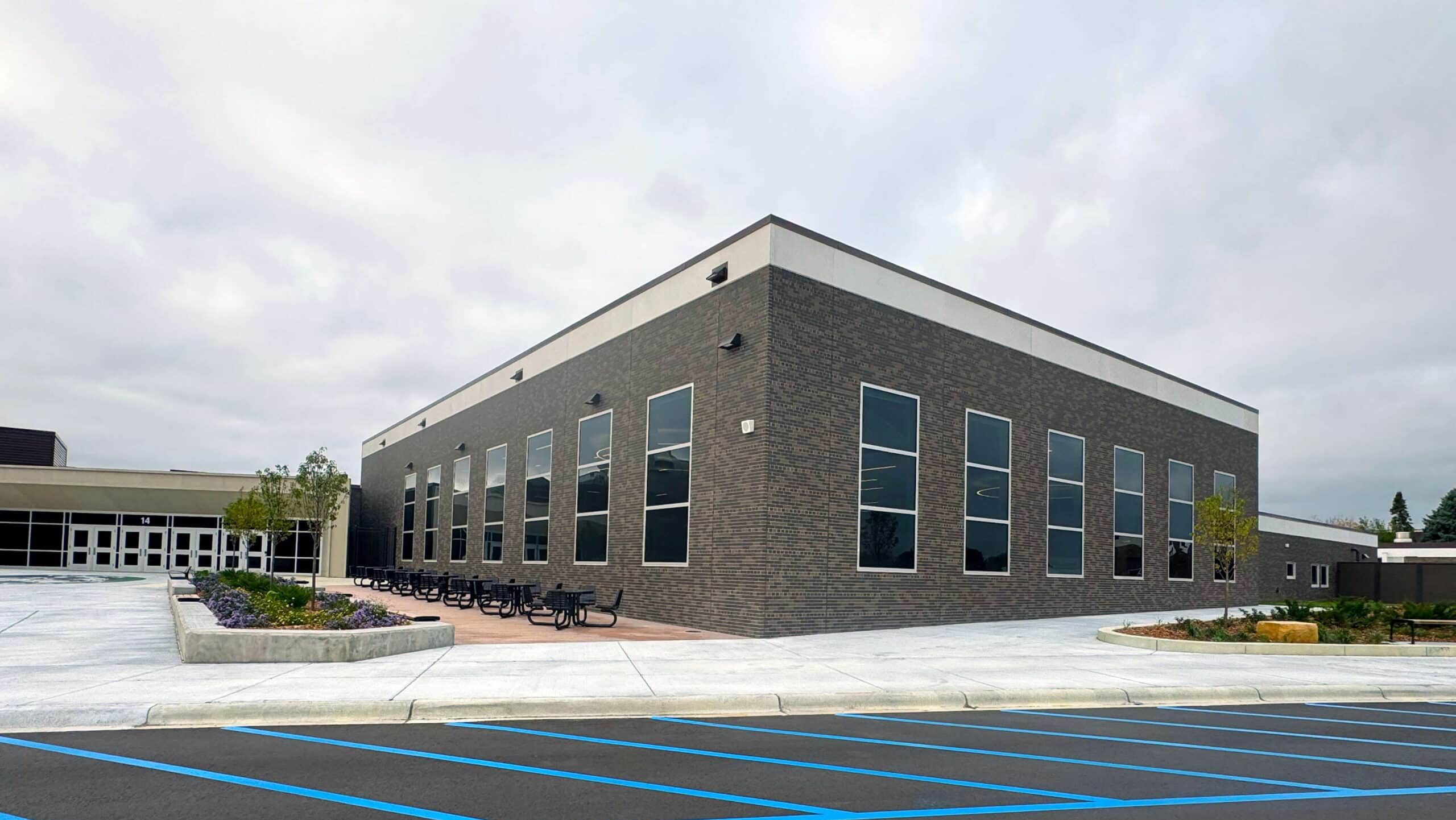
Many of these shelters are dual-use spaces: school gyms, cafeterias, classrooms, or training rooms that serve everyday functions and become shelters when a storm hits. That makes openings especially important. Windows and doors need to deliver the protection the shelter requires while still letting in natural light and supporting the space’s daily use.
How to Verify Storm Shelter Windows and Doors Are Compliant
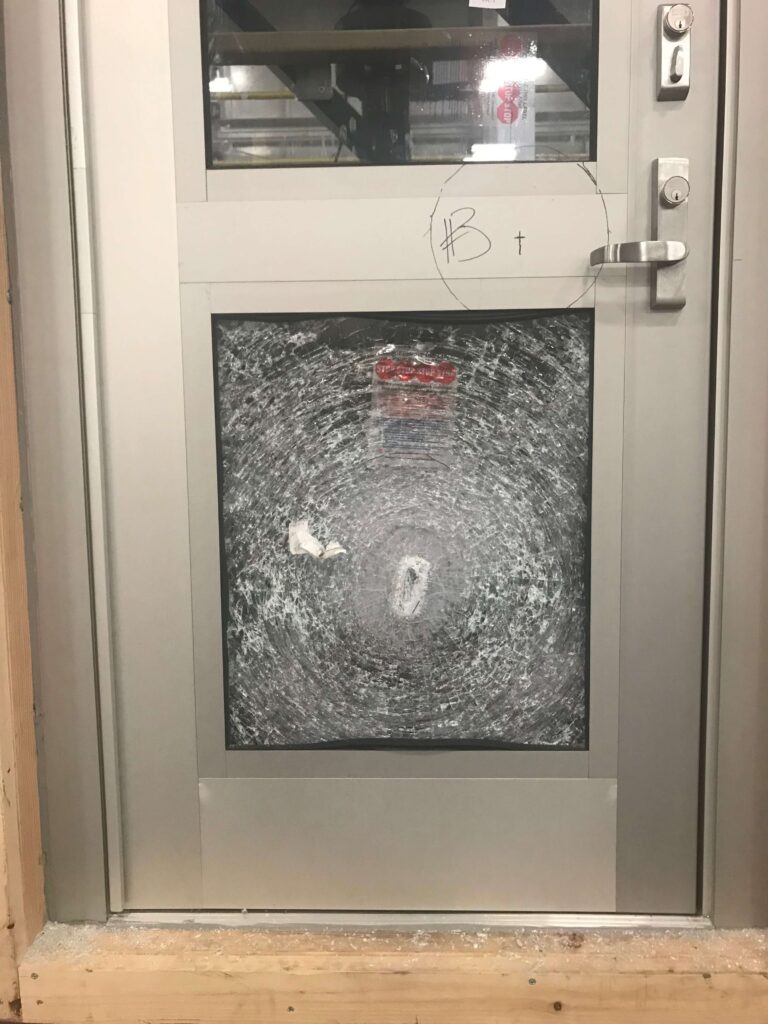
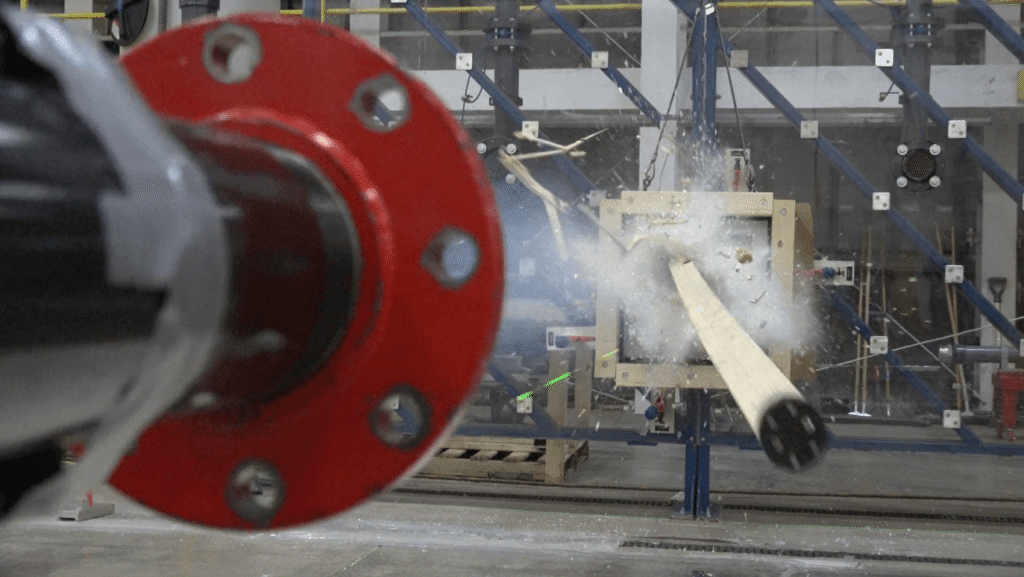
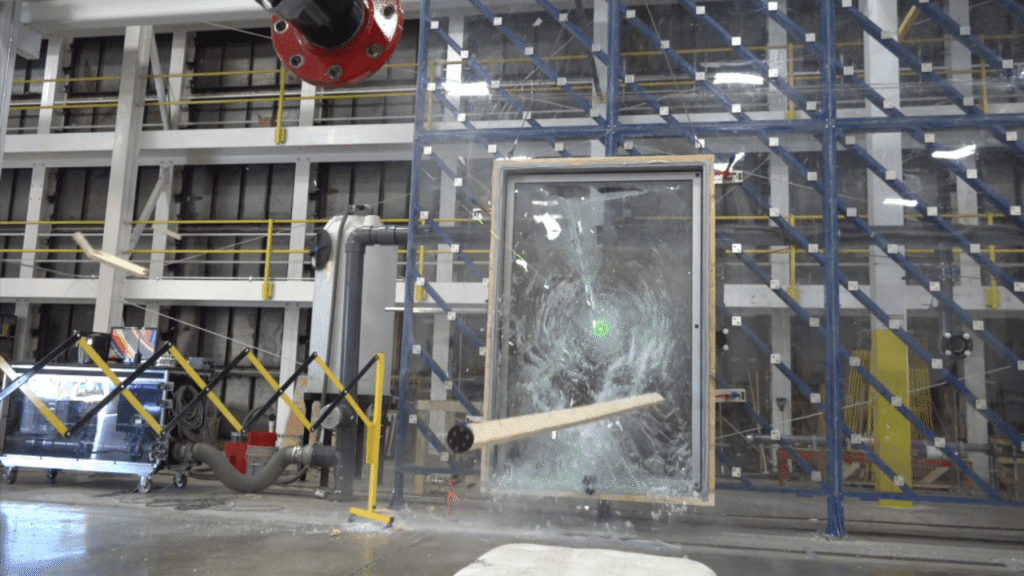
Windows and doors are often the most vulnerable points in a storm shelter envelope, and ICC 500 sets detailed impact and pressure testing requirements for them. When reviewing products, submittals, or substitution requests, look beyond marketing language and check the following:
- Independent third-party certification. Look for testing and certification by a recognized independent laboratory, such as UL, to a specific edition of ICC 500 and, where required, FEMA P-361.
- Listing and labeling. ICC 500 makes compliance labels mandatory on impact-protective systems and specifies the information those labels must show.
- The right editions. Confirm the product is certified to the ICC 500 edition adopted in your jurisdiction and, for grant-funded projects, the FEMA P-361 edition the funding requires.
- Tested sizes and configurations. ICC 500 requires testing of the minimum and maximum sizes of each configuration, so project-specific sizes need to fall within the certified range.
- Complete assemblies. The door or window, frame, glazing, and hardware should be tested together as a system, without substitution. Substituting glazing or hardware, even a comparable product, means the installed opening no longer matches what was tested and certified.
- Equivalent wall performance. A certified opening only protects occupants if the surrounding wall or substrate performs to the same level.
It’s also worth knowing that ICC 500-2023 made testing more demanding for glazed openings. Where a tested window includes a lock or latch, the designated corner impact must now be placed nearest it, and additional impacts are required at hinge joints and primary latches. The 2023 edition also added a maximum-deflection pass/fail criterion for impact testing and new pass/fail criteria for pressure testing. Products certified to ICC 500-2023 must meet these updated requirements.
For more on how storm shelter glazing is tested and specified, see our article on FEMA 361 windows.
How Insulgard’s StormDefend Systems Meet ICC 500 and FEMA P-361
As a manufacturer of storm shelter windows and doors, Insulgard builds its StormDefend systems around independent certification. The StormDefend TTH600 window system and TTH350 door system are certified by UL to ICC 500-2023, ICC 500-2020, ICC 500-2014, FEMA P-361-2024, FEMA P-361-2021, and FEMA P-361-2015 for use in tornado and hurricane safe rooms, including in the 250 mph wind zone. The TG30 and TG30-IG glazing used in these systems is certified to the same standards, and you can read more about how the systems are tested on our FEMA P-361 testing page.
Insulgard has been working to these standards for years. When it was introduced in 2018, the TTH600 was the first fully glazed window system to earn UL certification to ICC 500-14, and in 2020 the TTH350 became the first glazed aluminum door to do the same.
Both systems are also tested for bullet resistance to UL 752, which makes them a practical option for schools and public safety buildings that need to address more than one threat.
Planning a Storm Shelter or Safe Room?
Insulgard’s team works with architects, general and glazing contractors, and purchasing teams to specify storm shelter windows and doors that meet ICC 500 and FEMA P-361. We can provide specification support and CAD details, and help confirm that your project’s sizes and configurations fall within certification. Learn more about our tornado and hurricane safe room solutions or contact us to discuss your project.