

July 30, 2018
- Standards & Certifications
UL 752 Protection Standards for Bullet Resistant Glass Products
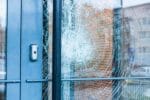
UL 752 Requires Absolute Protection
All products that have been tested and certified to meet the standards of a particular level must offer absolute protection from that type of ballistic threat. So if there is any spall created by an impact, that particular product would not qualify for UL 752 standards at that level.
Not All UL 752 Ratings Are Linear
When you think of a ratings system, you normally assume that the numbers correspond to the level of protection or benefit that is offered. Level 1 would be the lowest, level 2 would be the next in line, and so on. But that’s not the case for all UL 752 ratings.
In this specific instance, only levels 1 through 3 are lineal. So if something is tested to UL level 3, it would automatically meet the standards set for UL levels 1 and 2; however, once you get to level 4 the standards vary. For example, if something is tested for level 8 that doesn’t mean that it automatically meets the standards for level 7.
So rather than being an ordered ranking system, each level is meant to describe a particular product so that you can more easily find the type of ballistic protection that is most relevant to your needs.
UL 752 Levels 1-8 Explained
Each level requires the material to withstand impact from a specific type of ballistic impact. Here are the testing requirements for each level.
|
LEVEL |
REQUIREMENTS |
|---|---|
|
UL 752 Level 1 |
Provides protection against three shots of a 124-grain 9mm full metal copper jacket with lead core at an fps between1175 and 1293 |
|
UL 752 Level 2 |
Provides protection against three shots of a 158-grain .357 magnum jacketed lead soft point at an fps between 1250 and 1375 |
|
UL 752 Level 3 |
Provides protection against three shots of a 240-grain 44 Magnum Lead Semi-Wadcutter Gas Checked at an fps between 1350 and 1485 |
|
UL 752 Level 4 |
Provides protection against one shot of a 180-grain .30 caliber rifle lead core soft point at an fps between 2540 and 2794 |
|
UL 752 Level 5 |
Provides protection against one shot of a 150-grain 7.62mm rifle lead core full metal copper jacket military ball (.308 caliber) at an fps between 2750 and 3025 |
|
UL 752 Level 6 |
Provides protection against five shots of a 124-grain 9mm full metal copper jacket with lead core at an fps between 1400 and 1540 |
|
UL 752 Level 7 |
Provides protection against five shots of a 55-grain 5.56mm rifle full metal copper jacket with lead core (.223 caliber) at an fps between 3080 and 3383 |
|
UL 752 Level 8 |
Provides protection against five shots of a 150-grain 7.62mm rifle lead core full metal copper jacket military ball (.308 caliber) at an fps between 2750 and 3025 |
|
Shotgun |
Provides protection against three shots of a 12-gauge rifled lead slug at an fps between 1585 and 1744 and three shots of a 12-gauge 00 buckshot (12 pellets) at an fps between 1200 and 1320 |
But there are other practical considerations that may impact which bullet-resistant glass products you purchase. In order to find the UL 752 ballistic standards that most closely meet with your needs, contact Insulgard today. Our team of bullet resistant glass experts can help you understand more about the options available so you can get the most effective level of protection for your building.
NEW UL 752 Performance Designations (12th Edition)
The revised UL 752 standard categorizes threats by firearm type instead of level, offering greater clarity and flexibility. Each performance designation stands on its own and includes precise ammunition specs and performance criteria.
Handgun Designations (UL-HG)
|
Designation |
Ammunition |
Weight |
Velocity (fps) |
Kinetic Energy (ft-lb) |
|---|---|---|---|---|
|
UL-HG-A |
9mm Luger FMJ RN |
124 gr |
1305 |
467 |
|
UL-HG-B |
.357 Magnum JSP |
158 gr |
1430 |
715 |
|
UL-HG-C |
.44 Magnum JHP |
240 gr |
1430 |
1094 |
|
UL-HG-D |
9mm Luger FMJ RN (Hi-Vel) |
124 gr |
1470 |
592 |
Rifle Designations (UL-RF)
|
Designation |
Ammunition |
Weight |
Velocity (fps) |
Kinetic Energy (ft-lb) |
|---|---|---|---|---|
|
UL-RF-A |
.30-06 Springfield JSP |
180 gr |
2700 |
2922 |
|
UL-RF-B |
7.62 x 51 mm NATO FMJ |
149 gr |
2780 |
2566 |
|
UL-RF-C |
.243 Winchester PSP |
100 gr |
3000 |
1910 |
|
UL-RF-D |
.270 Winchester PSP |
130 gr |
3100 |
2766 |
|
UL-RF-E |
5.56 mm M193 FMJ |
56 gr |
3390 |
1417 |
|
UL-RF-F |
5.56 mm M855 FMJ |
61.8 gr |
3190 |
1394 |
|
UL-RF-G |
7.62 x 39 mm MSC FMJ |
124 gr |
2480 |
1695 |
|
UL-RF-H |
7.62 x 51 mm NATO FMJ (repeat) |
149 gr |
2780 |
2566 |
|
UL-RF-I |
.30 Caliber M2 AP FMJ |
165.7 gr |
2880 |
3070 |
|
UL-RF-J |
.50 Caliber M33 FMJ |
660 gr |
2910 |
12,389 |
Shotgun Designations (UL-SG)
|
Designation |
Ammunition |
Weight |
Velocity (fps) |
Kinetic Energy (ft-lb) |
|---|---|---|---|---|
|
UL-SG-A |
12 Ga. 1 oz. Slug |
437.5 gr |
1200 |
1398 |
|
UL-SG-B |
12 Ga. 00 Buckshot (12 pellets) |
650 gr |
1200 |
2075 |
Stricter Testing Protocols
The updated rating system also introduces more consistent and rigorous testing procedures to better reflect how materials perform under real-world ballistic threats. It includes stricter requirements for shot placement, clearly defined testing conditions, and mandates that a greater number of samples be tested for each ballistic threat designation.
UL 752 Applies to Architectural Systems Only
The revised UL 752 applies specifically to architectural security systems such as doors, windows, and protective enclosures. It does not apply to personal body armor or any worn ballistic protection, which continue to fall under other standards like those issued by the National Institute of Justice (NIJ).
Both Editions Remain in Use
During this industry-wide transition, both the 11th and 12th Editions of UL 752 remain valid. While the new designations are being adopted by manufacturers and testing labs, many products are still certified under the level-based system. Architects, consultants, and code authorities may encounter—and reference—either version depending on the project timeline and testing laboratory used.
How UL 752 Ratings Compare to Other Ballistic Standards
While UL 752 remains the most widely recognized standard for evaluating the ballistic performance of architectural glazing systems, it’s not the only benchmark used in the industry. Several other standards address related aspects of protection:
The National Institute of Justice (NIJ) provides ballistic standards primarily for personal protective equipment, such as body armor and ballistic shields. These differ from UL 752, which is focused specifically on architectural products like doors, windows, and security enclosures.
Meanwhile, the American Society for Testing and Materials (ASTM) offers multiple standards that evaluate the impact resistance and forced-entry protection of glazing and barrier systems. Examples include ASTM F1233 and ASTM F1915, both of which are used to test security glazing against physical attacks.
In addition, the newly introduced ASTM F3561-22 addresses a specific and increasingly relevant threat: forced-entry attempts following a ballistic attack, such as those seen in active shooter situations. Unlike UL 752, this standard does not require the glazing to stop a bullet—but it does require the barrier to remain intact enough to prevent an attacker from breaching the opening after it’s been shot. It evaluates the overall system’s ability to resist intrusion even after being compromised by gunfire.
Common Applications for UL 752-Rated Bullet-Resistant Glass
Bullet-resistant glass rated to UL 752 standards is used in a variety of high-security environments, including:
- Banks & Financial Institutions – Protecting tellers, ATMs, and transaction counters from armed threats.
- Government Buildings & Courthouses – Enhancing security for lobbies, reception areas, and judge chambers.
- Retail & Convenience Stores – Securing cash register areas and high-value merchandise.
- Schools & Universities – Providing ballistic protection for entryways and administrative offices.
- Police Stations & Law Enforcement Facilities – Providing protection for officers and detainees in secure areas.
Choosing the Right UL 752 Level for Your Facility
Selecting the appropriate UL 752 rating depends on:
- Threat Level – Are handguns, rifles, or shotguns the main concern?
- Building Function – Is this a financial institution, government facility, school, or retail space? Different environments have varying security needs.
- Visibility & Aesthetic Requirements – Some applications require full transparency, while others may prioritize multi-layered security glazing.
For professional guidance on selecting the right UL-rated bullet-resistant glass, contact Insulgard to discuss your facility’s security requirements.
UL 752-Rated Bullet-Resistant Glass Products from Insulgard
Insulgard offers a range of UL 752-rated bullet-resistant glass products designed for architectural security applications.
- TOR-GARD® Bullet-Resistant Glass – Available in UL Levels 1-8, this glazing provides high-performance protection while maintaining optical clarity.
- Glass-Clad Polycarbonate – A lightweight alternative to traditional bullet-resistant glass, offering protection up to UL Level 8.
- Laminated Polycarbonate Security Glazing – Ideal for interior security barriers, offering UL Level 1-3 protection with excellent impact resistance.
- Acrylic Bullet-Resistant Glazing – Provides cost-effective ballistic protection at UL Levels 1-3, commonly used in banks, cashier stations, and retail stores.